A Baropodometric Analysis of Postural Therapy Supported by Immersive Virtual Reality
Nov 20, 2024· ,,,,,·
0 min read
,,,,,·
0 min read
Ígor Andrade Moraes
Eduardo G. Q. Palmeira
Raul Matsushita
Alexandre Gomes de Siqueira
Dean A. Rodrigues de Oliveira
Alexandre Cardoso
Edgard Afonso Lamounier Júnior
Abstract
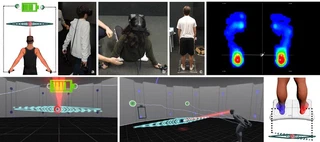
Virtual Reality (VR) can support postural therapies through proprioceptive assistance and engaging interactive features. Plantar pressure measurements are critical for accurate and individualized diagnosis of gait and posture. In a previous work, we developed an immersive VR environment to support postural therapy and conducted a user study. This study expands on previous research and aims to investigate the impact of postural therapy supported by immersive VR technology, compared to a traditional method. Our analysis utilizes unexplored baropodometric data collected during supervised therapy sessions in our prior work. Based on our current understanding, this study represents the pioneering exploration of combining baropodometric analysis with immersive VR technology to support postural therapy. In the experiment, healthy students (n = 22) with an average age of 12 years were randomly assigned to either an experimental or a control group. The experimental group underwent the therapeutic intervention using immersive VR, while the control group followed the same protocol without VR assistance. Baropodometric data were collected before and after the sessions and analyzed using the Wilcoxon test. Both groups showed postural improvements after the intervention, particularly in reducing foot pressure imbalances between the left and right feet; however, a statistical analysis indicated that VR-assisted therapy demonstrated more noticeable improvements in baropodometric parameters regarding weight and rearfoot weight distributions, as well as maximum foot pressure. Our findings reinforce the potential of integrating VR technology and baropodometric parameters to enhance therapeutic outcomes. This combination can serve as a complementary tool in clinical and research contexts, with the aim of improving diagnosis and treatment in postural therapy.
Type
Publication
Journal of the Brazilian Computer Society, 30(1)
Status
Peer-reviewed
Open access
License
CC-BY-4.0
